
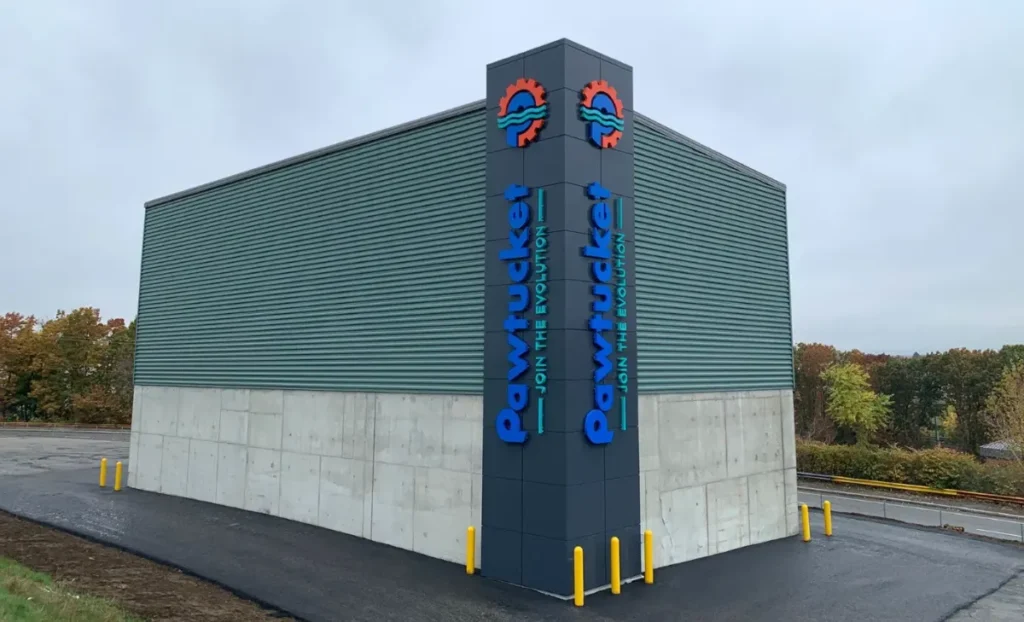
A municipal salt storage building is a covered shed that keeps road salt dry, safe, and ready for winter. Building one takes more than putting up a roof. You need good site work, a strong base, a building that can handle salt, and room for big trucks to move. Here is what towns and state agencies should plan for.
Why Towns Need a Salt Storage Building
Road salt has two big enemies: rain and snow. When salt gets wet, it can clump into hard chunks that are tough to load. Wet salt can also wash away and soak into the ground nearby. A good salt shed keeps the pile dry and keeps salt where it belongs.
It also helps on storm days. Crews need to fill trucks fast, often in the middle of the night. A building with a clear layout and easy truck access makes that job quicker and safer.
What Goes Into a Salt Storage Building Project?
Every site is different, but most salt storage projects include the same main parts. Each one matters for how long the building lasts.
- Site work: grading, drainage, curb cuts, and utilities so trucks can get in and out.
- Foundation and walls: a strong concrete base and lower walls that can take the push of a loader and a heavy salt pile.
- The building itself: often a dome, a fabric structure, a wood frame, or a pre-engineered metal building.
- Tall, wide doors and open space: so trucks and loaders can dump and scoop without hitting anything.
- Salt-safe materials: salt eats away at bare steel, so the parts near the pile need protection.
A Real Example: The RIDOT Pawtucket Salt Storage Facility
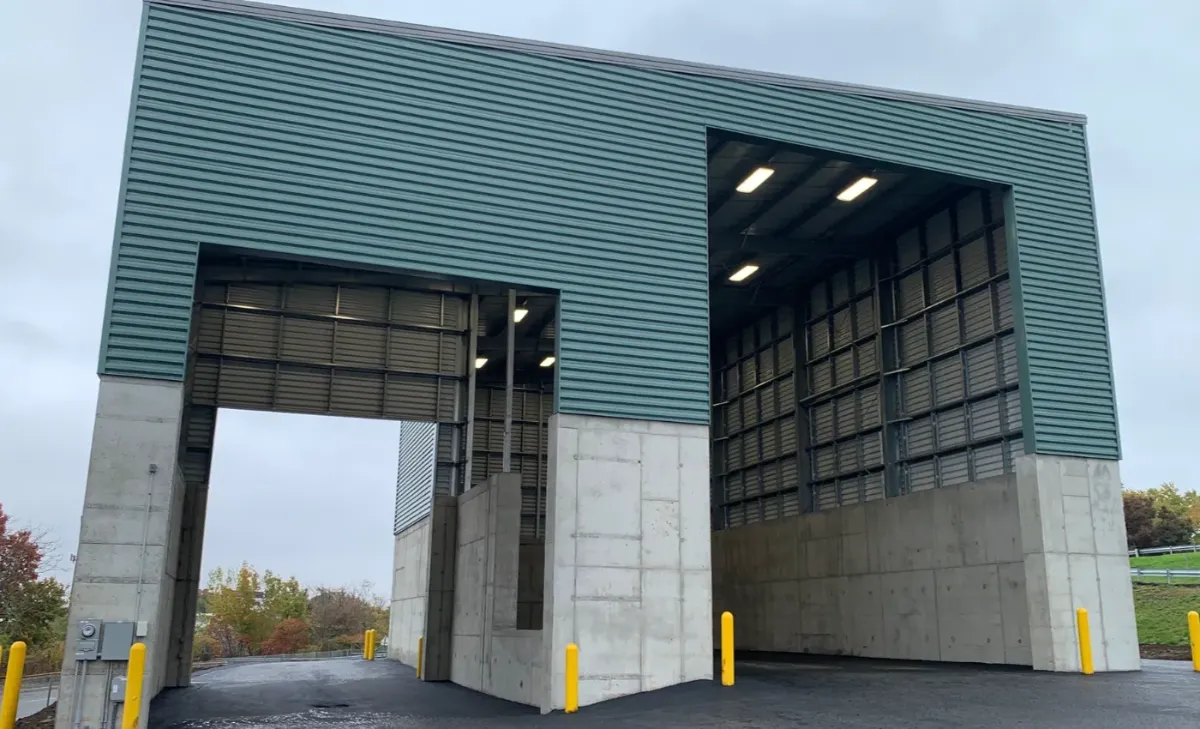
At Tower Construction, we built the RIDOT Pawtucket Salt Storage Facility for the Rhode Island Department of Transportation. The site sits off I-95 and was a small lot before we started. We handled the full site work, including curb cuts, the foundation, and utilities. Then we put up a pre-engineered metal building with its framing and roof.
A small lot makes planning even more important. Trucks still need room to turn and back in. The building has to fit the space without blocking the flow of traffic on storm days. Getting those details right on paper first saves a lot of trouble later.
What Affects the Cost and Timeline?
We can’t give one price that fits every salt shed, and you should be careful of anyone who does. The cost depends on how much salt you need to store, the type of building, and how much site work the lot needs. Poor soil, tight sites, and new utilities can all add cost. A simple building on a flat, open lot will cost less than one squeezed onto a small urban site.
Timing matters too. Most towns want the building done before winter. That means the planning and bidding should start early in the year, not late summer. Our preconstruction team can help you price the job and set a schedule that hits that winter deadline.
Conclusion
A municipal salt storage building keeps salt dry, protects the ground around it, and helps crews work fast in a storm. A good project plans for site work, a strong base, salt-safe materials, and room for trucks. You can see more of our public works projects to learn how we handle jobs like this. If your town or agency is planning a salt shed, talk with our team about where to start.